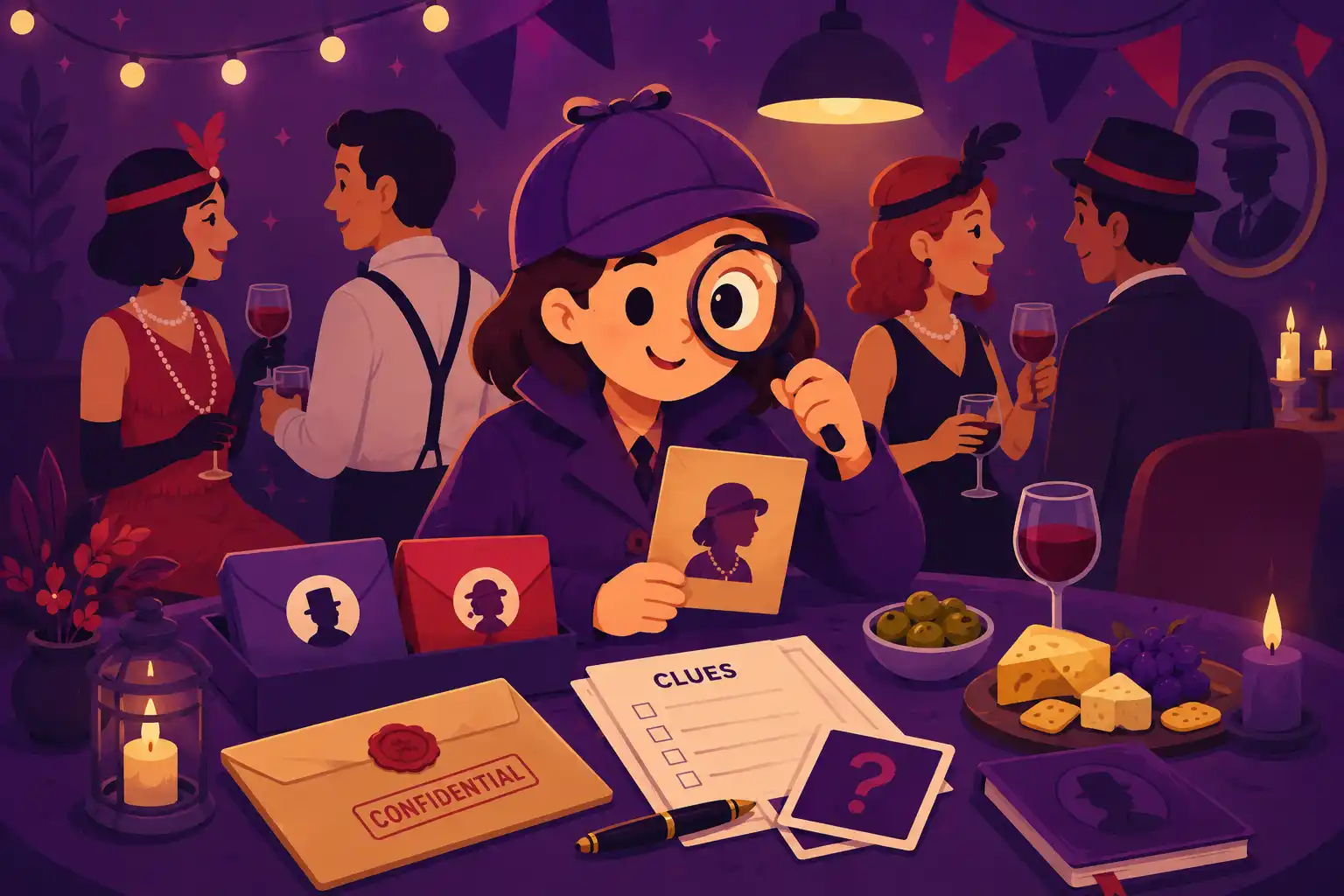
A great murder mystery party isn’t about elaborate decorations, theatrical acting, or transforming your home into a film set. What your guests will remember is getting caught up in the story, uncovering clues, sharing theories, and experiencing that satisfying moment when everything finally clicks into place.
The good news is that creating that experience is often much simpler than people think.
If you’re hosting your first murder mystery party, it’s completely normal to feel a little nervous. You might be wondering how the game works, what your guests need to do, or whether you’ll accidentally forget something important.
And if you’ve hosted one before and it didn’t quite go to plan, perhaps the rules were confusing, the pacing felt awkward, or people weren’t sure what they were supposed to be doing, you’re certainly not alone.
Most hosting problems don’t come from a lack of effort. They come from a handful of avoidable mistakes made before the first guest even arrives.
The best murder mystery parties feel effortless for everyone involved because the host has made a few smart decisions in advance. Choose the right game, prepare your guests properly, keep the instructions clear, and you’re already most of the way there.
Whether you’re planning a family gathering, a birthday celebration, a dinner party with friends, or a team-building event, these simple steps will help you create a mystery your guests will be talking about long after the culprit has been revealed.
What you’ll find in this article
Start with the right murder mystery party game
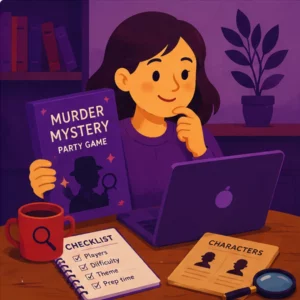
If there’s one decision that will have the biggest impact on your event, it’s choosing the right game.
Everything else, including your guest list, invitations, food, decorations, and schedule, becomes easier once you’ve selected a game that suits your group.
One of the most common mistakes new hosts make is choosing a game based solely on the theme. While a glamorous 1920s setting or a spooky manor house might sound exciting, the structure of the game is far more important than the backdrop.
When comparing murder mystery party games, look for:
- A player count that matches your expected guest list
- Clear instructions for both the host and players
- Fair, logical clues that can actually be solved
- A difficulty level appropriate for your group
- A format that fits the amount of preparation you’re willing to do
A well-designed mystery should challenge players without frustrating them. The solution should feel surprising, but when the culprit is revealed, the clues should make sense in hindsight.
Be cautious of games that rely on impossible riddles, hidden information that players could never reasonably discover, or complicated rules that require constant explanation throughout the night. The best mysteries keep people engaged because they’re clever, not because they’re confusing.
If you’re hosting for the first time, simplicity is usually your friend. A straightforward game with clear instructions will almost always create a better experience than an overly ambitious one.
For a deeper look at what separates a satisfying mystery from a frustrating one, see our guide to choosing the right murder mystery game. While that guide focuses specifically on murder mysteries, the same tips apply to choosing any kind of mystery game.
Confirm your guest list before planning the details
Before you start thinking about food, decorations, or costumes, make sure you know roughly how many people will be attending.
Most murder mystery party games are designed for a specific number of players. Choosing a game that requires ten characters when only seven guests can attend is a recipe for unnecessary stress.
Try to confirm numbers as early as possible and keep a small buffer for last-minute changes.
It’s also worth considering your guests’ personalities. Some people love stepping into character and fully embracing the role-playing side of the game. Others are more comfortable solving clues and discussing theories without acting dramatically.
The best murder mystery parties cater to both types of guests. Nobody should feel pressured to perform if they don’t want to.
Send invitations and assign roles early
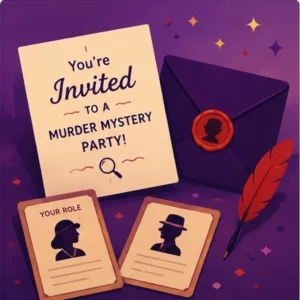
One of the easiest ways to improve a murder mystery party is to give guests enough notice.
If your game includes character roles, send them out in advance whenever possible. This gives players time to familiarise themselves with their character and decide how much they want to lean into the role. If anyone wants to dress up, it also gives them time to organise their costume.
Your invitation should clearly explain:
- The date, time and location
- Whether costumes are encouraged or optional
- Any theme information guests should know
- How long the event is expected to run
- Whether food and drinks will be provided
Note, costumes can be a lot of fun, but they should never become a barrier to participation. A simple accessory, colour scheme, or themed outfit is often more than enough to help guests get into the spirit of the game. To make things easy on yourself and your guests, you could source a simple accessory for each character from a local op-shop, kmart or similar discount shop. That way you can ensure no one goes overboard and you don’t have anyone declining your invitation just because of the costume aspect. (And if that seems like too much effort, consider just making everyone character-name tags.)
Plan food and drinks around the game
If you’re hosting a murder mystery dinner party, it can be tempting to focus heavily on the menu. In reality, the food should support the game rather than compete with it.
Simple meals and easy-to-manage snacks usually work best because they allow guests to stay engaged with the mystery. Finger food, grazing platters, shared dishes, or a relaxed sit-down meal can all work well depending on the style of event you’re hosting.
Try to avoid anything that requires constant attention from the host. The last thing you want is to miss an important clue reveal because you’re stuck in the kitchen.
When planning your schedule, think about how food fits into the story. Natural breaks between rounds or clue releases are often ideal times for guests to eat, chat, and compare theories.
Set the scene without overdoing it
Many first-time hosts assume they need elaborate decorations to create an immersive experience.
Fortunately, that’s rarely true.
A few thoughtful details can be far more effective than an entire room full of decorations. Depending on your game’s theme, you might consider:
- Background music
- On-theme printed invitations or clue sheets
- Themed table settings
- Character name cards
- Simple props that support the story
Remember, the mystery itself is the main attraction.
Your guests are there to solve a case, uncover secrets, and enjoy the experience together. Decorations should enhance the atmosphere, not become another project that adds unnecessary pressure.
Explain the rules before the mystery begins
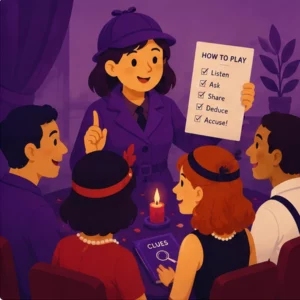
Even the best murder mystery party game can fall flat if players aren’t sure how it works.
Before the game starts, take a few minutes to explain the basics. Let everyone know:
- How clues will be revealed
- Whether players can share information freely
- How accusations work
- What the overall goal of the game is
- How long each stage is expected to last
- Whether there’s anything they can’t do
Keep your explanation simple and focused.
Most guests don’t need a detailed lecture. They simply need enough information to feel comfortable getting started.
A confident introduction helps players relax and engage with the story more quickly.
Keep the game moving without taking over
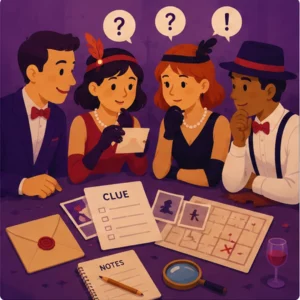
One of the most important things to understand about hosting a murder mystery party is that your job isn’t to solve the mystery for everyone else.
Your role is to guide the experience.
As the game unfolds, keep an eye on the pacing. Encourage quieter guests to participate, answer questions when necessary, and make sure clues are introduced at the right time.
If the group gets stuck, resist the urge to hand out answers immediately. A gentle prompt is usually enough to get people thinking in the right direction again.
The most enjoyable mysteries give players the satisfaction of making discoveries for themselves. When guests feel ownership over their deductions and theories, the final reveal becomes much more rewarding.
End with accusations, revelations and plenty of discussion
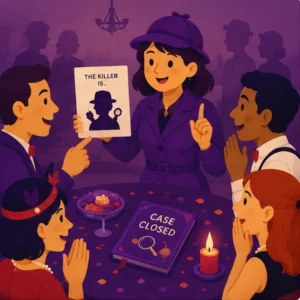
The ending is often the most memorable part of the entire evening.
Once all the clues have been uncovered, give everyone an opportunity to share their theory and identify who they believe committed the crime. Some guests will be absolutely convinced they’re right. Others will change their minds several times before making a final accusation.
That’s all part of the fun.
When the culprit is revealed, take the time to explain how the clues fit together. A satisfying ending isn’t just about discovering who did it. It’s about understanding why they did it and how the evidence pointed in that direction.
Afterwards, allow a little time for discussion. Guests often enjoy comparing theories, sharing what they missed, and reliving key moments from the game.
One mistake some first time hosts make is underestimating how long the mystery will take to solve and they try to compensate for that by rushing this ending phase. Many murder mystery parties last between two and three hours, although the exact timing depends on the game, group size, how much socialising happens along the way, and how long everyone discusses the outcome at the end. So, make sure you’ve planned enough time to complete the puzzle at a leisurely pace.
Frequently asked questions
How does a murder mystery party work?
In a murder mystery party, guests take on the roles of characters involved in a fictional crime. Throughout the game, players uncover clues, ask questions, share information, and piece together what happened.
By the end of the game, everyone makes their accusation before the true culprit is revealed.
How many people do you need for a murder mystery party?
The number of players depends on the game you choose. Some murder mystery party games are designed for as few as four or six players, while others can accommodate twenty or more.
Before sending invitations, check the recommended player count and choose a game that suits your group size.
How long does a murder mystery party take?
Most murder mystery parties take between two and three hours to complete. However, the exact length depends on the game itself, the number of guests, and whether you’re serving food during the event.
Some larger or more complex games may run longer. Some games aimed at younger children will run shorter to match their reduced attention span.
Do guests need costumes for a murder mystery party?
No. Costumes can make the experience more immersive, but they aren’t essential.
Many groups enjoy dressing up, while others prefer to focus on solving the mystery. If you do encourage costumes, keep the expectations simple and make participation optional.
Can you host a murder mystery party without a kit?
Yes, it’s possible to create your own mystery or find free resources online.
However, a well-designed murder mystery party game can save a significant amount of time and help ensure the clues, characters, and storyline work together properly. This is often the easiest option for first-time hosts.
What food should you serve at a murder mystery party?
Simple food is usually best. Finger food, grazing platters, shared dishes, or a casual meal allow guests to stay engaged with the mystery without lengthy interruptions.
For some games, it might add to the enjoyment if the food is on-theme. For example, a magical murder mystery party might benefit from food inspired by well-known magical worlds (e.g. Harry Potter). But if the idea of making or sourcing themed food makes you anxious, don’t do it!
The goal is for food to support the experience rather than distract from it.
What if some guests don’t like acting?
That’s completely normal.
Most people enjoy murder mystery parties because of the puzzle-solving and social interaction, not because they want to perform. A good game should allow guests to participate at their own comfort level.
Some will fully embrace their character, while others will focus on gathering clues and solving the case.
If acting is going to be a barrier for your crew, consider a murder mystery game that doesn’t involve participants playing any characters — one where you sift through clues from a kit to solve the murder instead of questioning characters to elucidate clues. These are also good options if you can’t nail down an approximate number of guests because they can be solved by one person by themself or a large number of people working together.
What’s the biggest mistake people make when hosting a murder mystery party?
The most common mistake is overcomplicating things.
Hosts sometimes spend too much time worrying about decorations, costumes, or theatrical details and not enough time choosing the right game and preparing guests properly.
Clear instructions, a well-structured mystery, and a relaxed atmosphere will usually create a better experience than an elaborate setup.
Ready to gather the suspects?
Learning how to host a murder mystery party is much easier than most people expect.
You don’t need professional acting skills, expensive decorations, or months of planning. With the right game, a little preparation, and clear communication, you can create an engaging experience that brings people together and keeps them talking long after the mystery has been solved.
If you have any questions about hosting a murder mystery party, we’d love to hear from you. Get in touch and let us know what’s on your mind. Not only will we do our best to help, but your question may also inspire future guides, tips, and resources that help other detectives create unforgettable mystery nights.